
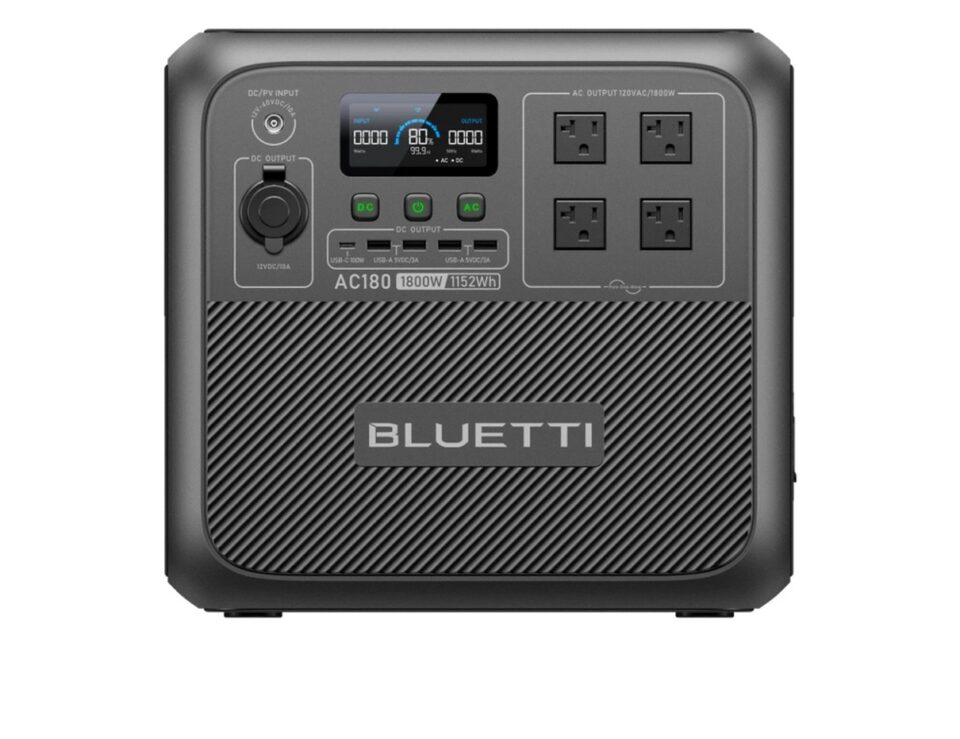
A practical guide to matching BLUETTI’s portable stations with the devices and backup time you want to cover as colder weather arrives.
Autumn is a useful moment to review the basics: a storm can bring a power interruption just as evenings get darker and household heating becomes more important. A portable power station can keep selected devices running, but the right size depends on what you intend to plug in and for how long.
We look at the Canadian BLUETTI range through that planning question. The product pages give wattage and battery capacity, which help narrow the field; your appliance labels and actual backup priorities should make the final call.
We may earn a commission when you buy through links on this page, at no extra cost to you.
Key facts: The Elite 200 V2 has 2,600W output and 2,073.6Wh capacity, the AC180 offers 1,800W and 1,152Wh, and the Elite 100 V2 lists 1,800W and 1,024Wh. Start with essential loads, then compare capacity, inverter output, recharge plans and storage needs.
Choose capacity around the essentials you need to keep running
Make a short list before comparing models. A modem, phone, lamps and small electronics have different demands from a refrigerator, sump pump or medical device. The wattage number describes the power a station can deliver at once; watt-hours describe stored energy. Both matter, and neither alone promises a particular runtime for every appliance.
- List the devices you consider essential during an outage, including any start-up surge noted by the manufacturer.
- Add likely simultaneous loads and compare the total with a station’s rated output.
- Estimate the hours you want from the battery, allowing for conversion losses and device cycling.
- Decide how you will recharge if an interruption lasts beyond the first battery cycle.
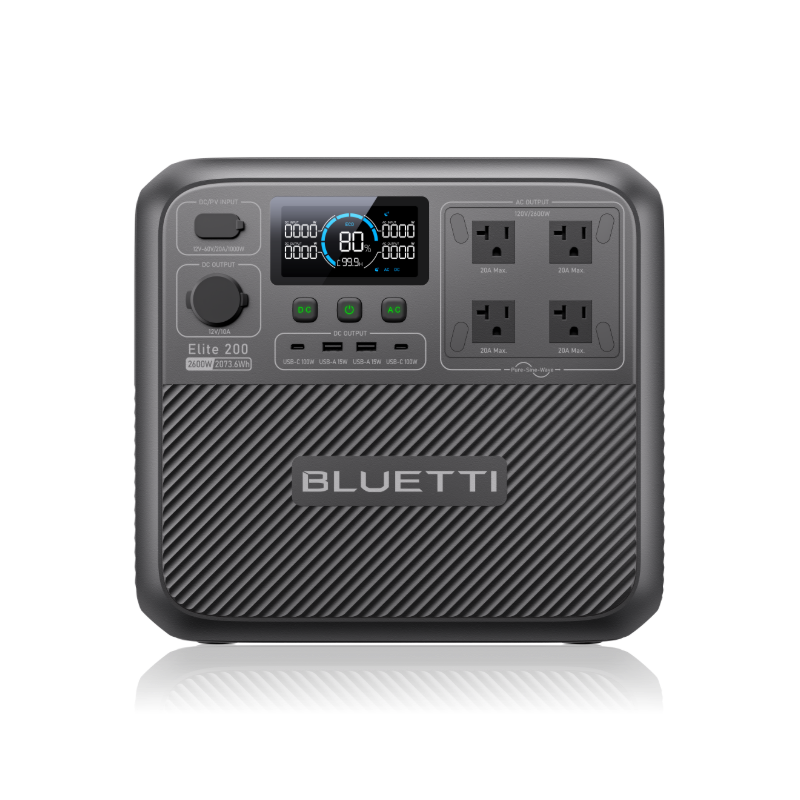
The Elite 200 V2 is the largest of these three examples by listed capacity: 2,073.6Wh, with 2,600W output. That makes it the starting point when you want more stored energy and higher output headroom in one portable unit. BLUETTI lists LiFePO4 chemistry for this model. See the Elite 200 V2 on the Canadian store and check the current configuration and price there.
Its trade-off is practical: a larger station takes more space and is less convenient to move than a compact unit. For a few small devices, capacity and output may exceed the need. Check the dimensions, weight and included charging accessories on the product page before choosing a storage spot.
AC180 balances household output with a smaller battery
The AC180 sits between the other two on capacity, with 1,152Wh and 1,800W output listed by BLUETTI Canada. It can suit a reader who wants a capable general-purpose station for electronics and selected appliances, while keeping the system smaller than the Elite 200 V2. Its product listing describes solar charging compatibility, so it may also fit a plan that includes separate panels.
Before treating that as whole-home backup, check the loads carefully. A portable unit powers chosen devices through its outlets; it does not automatically energize household circuits. The AC180 is worth comparing when portability and meaningful output both matter, but a longer outage or high-draw appliance may call for a larger setup or a different installation approach.
- Check appliance running watts and any surge requirement.
- Review outlet types and charging methods for your planned setup.
- Confirm the station can be stored within BLUETTI’s temperature guidance.
Elite 100 V2 fits a shorter essential-device list
The Elite 100 V2 lists 1,024Wh capacity and 1,800W output, with LiFePO4 chemistry. Its output rating matches the AC180 while its stated capacity is lower, making it a sensible comparison for a more compact backup plan focused on communications, lighting and smaller electronics. The BLUETTI Canada product listing also presents it for camping, but the same capacity and load questions apply at home.
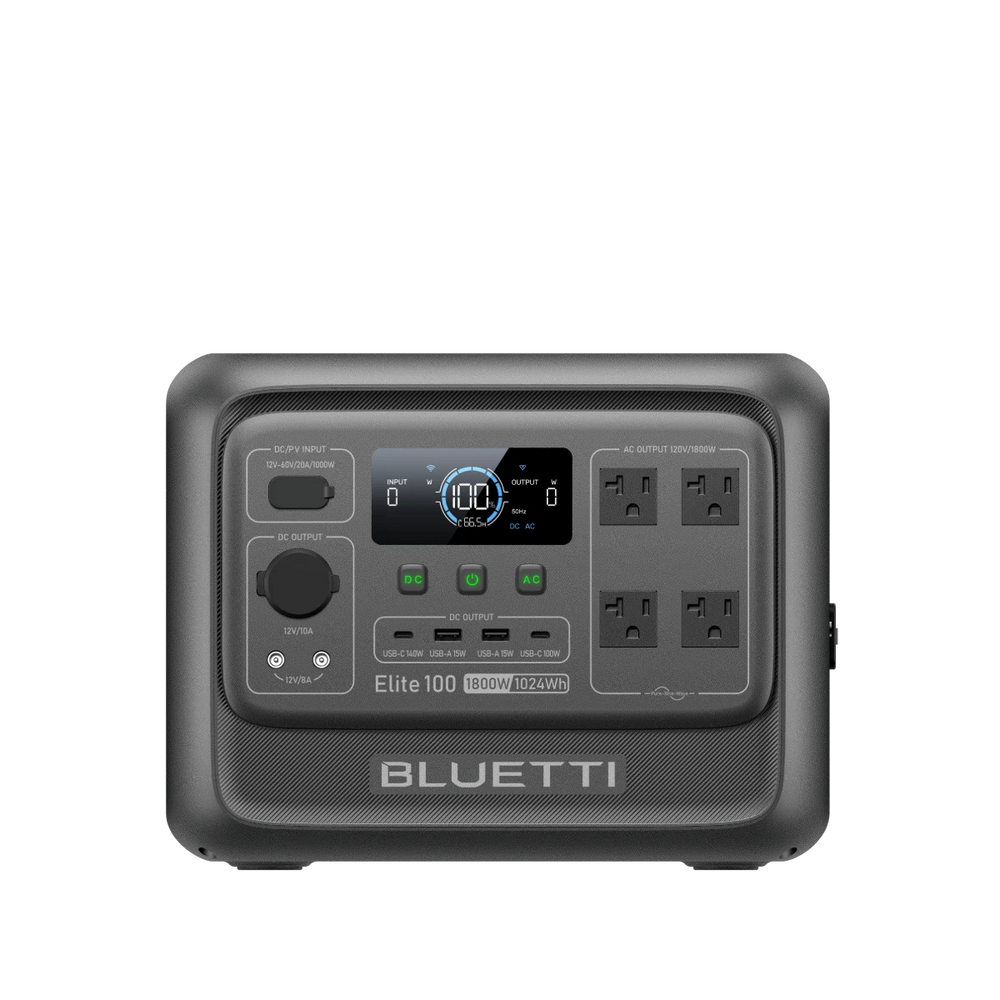
That distinction is why an output number alone should not determine the purchase. Two stations can share an output rating and still provide different energy reserves. If the Elite 100 V2 matches your device list, compare its dimensions, included cables and charging speed against the AC180 before deciding whether the additional capacity is useful to you.
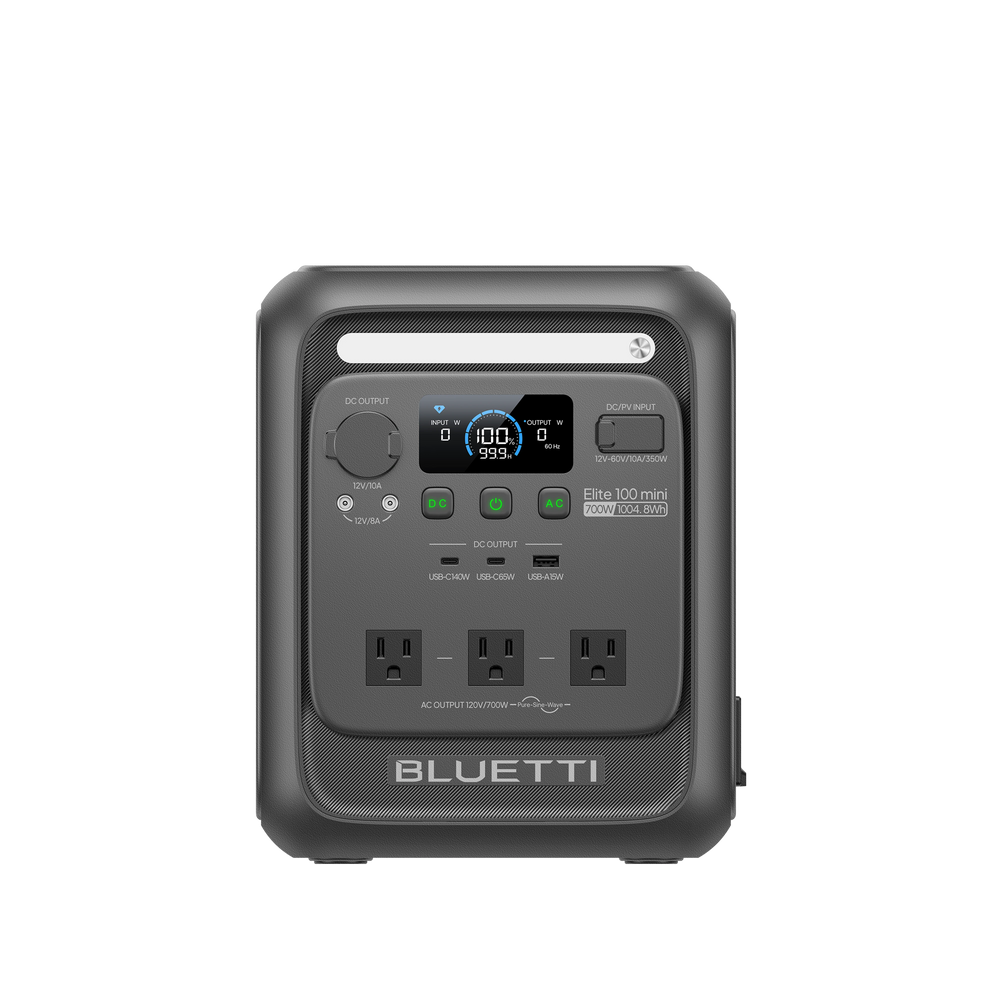
For perspective, BLUETTI also lists smaller options such as the Elite 100 mini at 700W and 1,004.8Wh. That can be an alternative for lighter loads, but compare its lower output rating against the starting needs of anything you plan to run. The Elite 100 mini is not a substitute for checking appliance compatibility.
A side-by-side shortlist keeps the decision grounded
| Model | Listed output | Capacity | Best fit |
|---|---|---|---|
| Elite 200 V2 | 2,600W | 2,073.6Wh | Longer or broader essential-load plan |
| AC180 | 1,800W | 1,152Wh | Middle-ground portable backup |
| Elite 100 V2 | 1,800W | 1,024Wh | Focused, lower-capacity plan |
These are manufacturer-listed ratings, not a runtime guarantee. Actual performance depends on load, temperature, battery condition and how the device draws power. Use the comparison to shortlist models, then consult the Canadian product pages for current price, dimensions, charging details, warranty terms and availability.
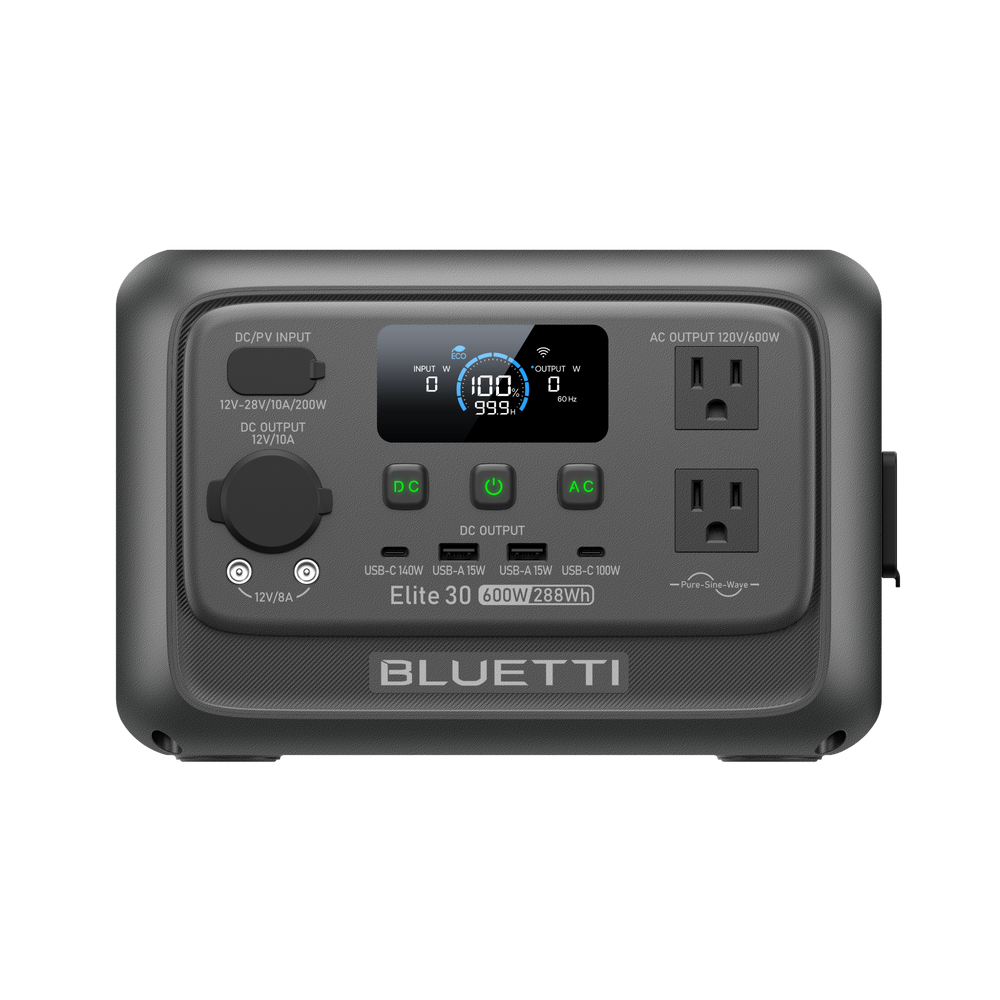
Autumn planning includes charging and safe storage
Capacity is only part of readiness. A station that is flat when an outage begins will not help, and a stored battery needs appropriate care. BLUETTI’s preparedness guidance says to keep a unit between 60% and 80% for long-term storage, keep it in a cool, dry place and check its function every six months. Follow the model manual for exact care instructions.
- Pick an accessible storage location protected from moisture and temperature extremes.
- Keep charging leads and the device list together so setup is straightforward.
- Test the intended devices before severe weather, without assuming a test predicts exact runtime.
- Consider whether solar panels or vehicle charging fit your location and outage conditions.
Solar can add a replenishment route when conditions allow, but it depends on daylight, weather, panel compatibility and setup space. The Canadian store sells station-and-panel combinations as well as standalone products. Compare the listed input limits and included components rather than assuming any panel will pair with any station.
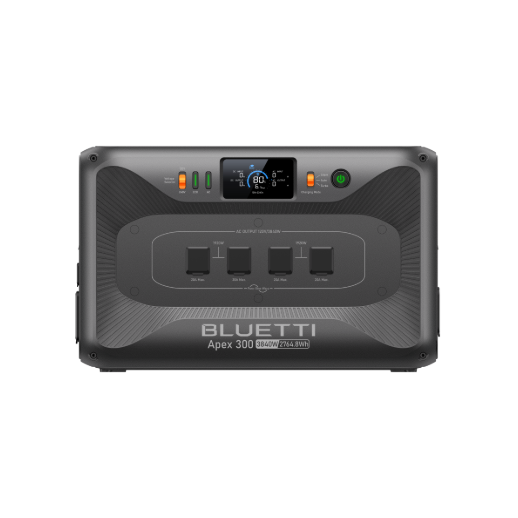
For readers expecting to support more household equipment, the Apex 300 is another Canadian-store option, listed at 3,840W output and 2,764.8Wh capacity. That broader specification does not remove the need to plan loads or investigate whether a home backup system and professional installation are appropriate. The Apex 300 belongs on a shortlist when those higher ratings are relevant, not simply because the number is larger.
Before you decide
Our recommendation is to choose from the appliance list outward: the Elite 200 V2 for a broader reserve, the AC180 as a balanced middle option, or the Elite 100 V2 for a focused set of essentials. Check current pricing on the store because cost varies with model and bundled solar equipment.
The limitation is important: portable power stations are finite batteries, and runtime depends on what is connected. They will not keep every household circuit operating by default. Verify device requirements and the product’s current specifications before committing.
Choose the BLUETTI station whose output and stored energy match the devices you truly need during a fall outage.