
A first look at Frameless’s projection-led galleries, changing programmes and the choices that help a newcomer find a fitting visit.
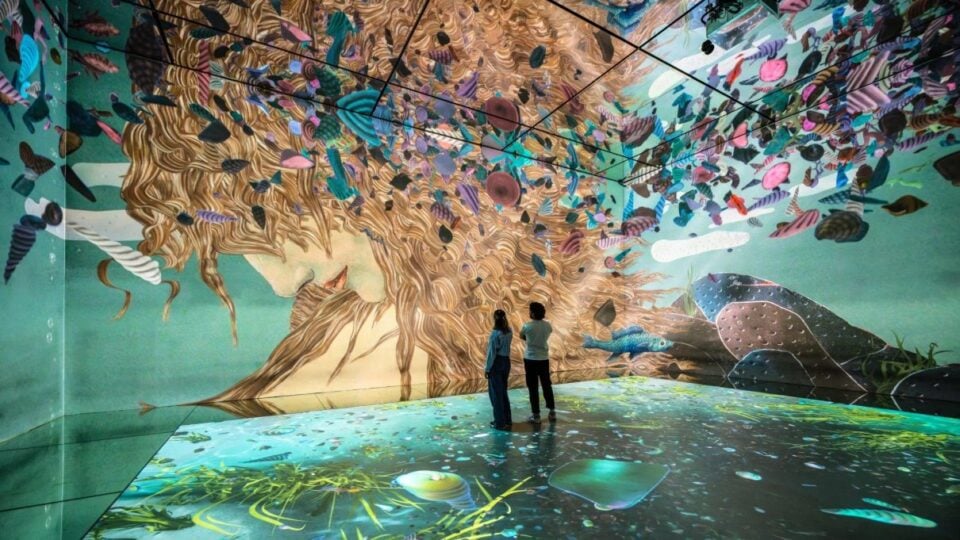
Frameless is built around a simple curatorial shift: the visitor steps inside an interpretation of art, rather than viewing every work at a fixed distance on a wall. In London, the venue uses projection and sound across four galleries to make scale, colour and movement part of the encounter.
That format raises useful questions for a first-time reader. Is the draw the technology, the artworks, or the event wrapped around them? The answer depends on which part of the programme you choose, and on whether you enjoy a sensory setting that leaves room for your own reading.
We may earn a commission when you buy through links on this page, at no extra cost to you.
Key facts: Frameless centres on four immersive galleries, with standard admission as the broad introduction and separate formats such as FRAMELESS Lates and the Comedy Wildlife Awards residency. Its appeal is the way image, room and sound work together; the trade-off is that the projection-led experience asks you to enjoy interpretation and atmosphere as much as close study of an original canvas.
Frameless makes the gallery itself part of the interpretation
The venue describes a programme spanning more than 40 artworks across its four galleries. Rather than treating projection as a screen added to a conventional exhibition, Frameless turns walls and surrounding space into the viewing surface. The venue says original scores accompany the imagery; together, sound and large-scale projection set a pace and mood that can make compositions feel newly expansive.
That change in scale is the central idea, and also the best way to set expectations. The format can help newcomers approach familiar art through colour, rhythm and visual association. It is less suited to a visit whose main purpose is to inspect brushwork, labels or an original object at close range. We see the venue as an interpretation-led cultural outing, with the artwork as its starting point rather than its only attraction.
The venue groups its permanent offer into distinct gallery environments rather than a single linear exhibition. For a first visit, the standard admission page is the practical starting point: it covers the general gallery experience, with dates and access details set out by the venue. Readers can review the current format through standard admission information and return to the ticket and visit details when choosing a date.
- Scale: floor-to-ceiling imagery changes how a composition occupies a room.
- Sound: original scores accompany the visual sequence and influence its atmosphere.
- Interpretation: movement and colour offer a different entry point from a traditional wall label.
The four-gallery format gives newcomers room to follow curiosity
A multi-room visit gives the programme a useful breadth. The rooms do not need to be approached as a checklist; visitors can spend time with the environments that hold their attention and move on when they are ready. That freedom matters in an experience based on sensation, where one person may be drawn to vivid abstraction and another to a more recognisable image.
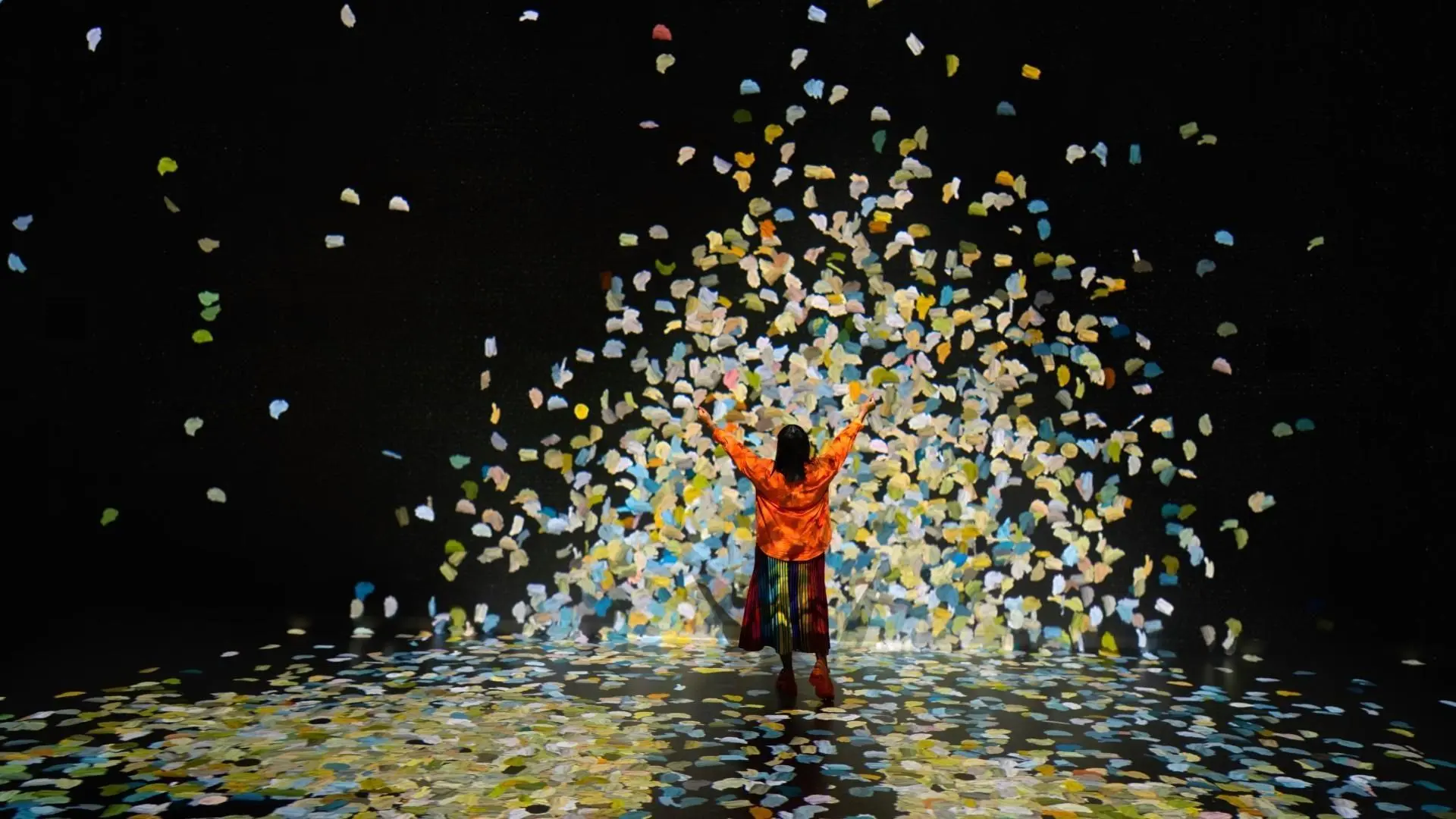
The Colour in Motion gallery is a good example of how abstract forms can make colour and rhythm the subject. Images fill the room, so the viewer notices transitions and relationships across the walls. In that setting, the work is not just something to identify; it is also a pattern to inhabit for a moment.
We would treat that as a strength for mixed-interest groups: the offer is legible even when visitors arrive with different levels of art knowledge. The limitation is that projection can compete with the quiet, self-directed looking some gallery-goers prefer. Checking the standard admission page helps establish what is included and the arrangements for the chosen date; review the admission information before planning, then check the venue details again as plans firm up.
FRAMELESS Lates changes the social rhythm of a visit
FRAMELESS Lates recasts the galleries as an evening occasion. The venue presents it as an after-hours event, so the choice is not only about seeing the same rooms at a different time: it is about deciding whether a social, evening atmosphere suits the group. A reader interested in that format can explore FRAMELESS Lates and see the event details on the venue site.
For a date night or a group looking for culture with a livelier frame, Lates has a clearer identity than general admission. It will not be the default for every visitor, especially anyone planning around younger guests or preferring a quieter daytime pace. Our advice is to compare the event’s age and access notes with the needs of your party, then check the Lates listing and review the evening format before selecting it.

The difference illustrates a broader point about the brand: Frameless sells a designed visit, not just entry to rooms. The event wrapper matters, and the best fit is the one that matches the mood you want from the outing. Readers can view the current Lates information if the evening format is the main draw.
Residencies give the programme a changing subject
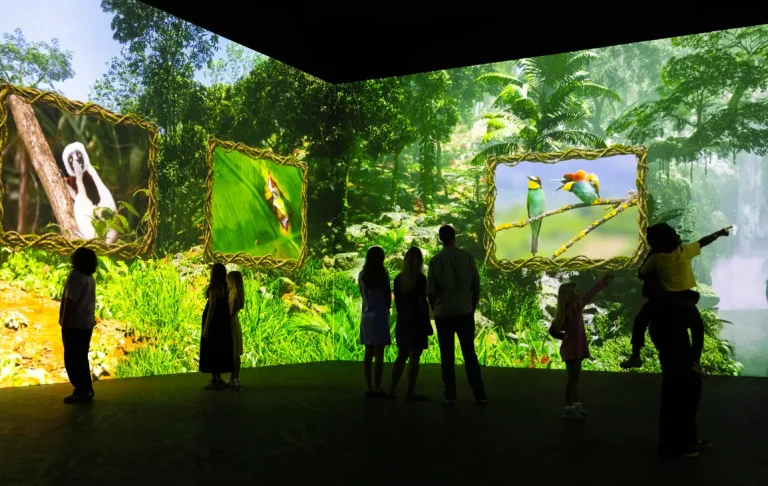
Alongside its established gallery structure, Frameless uses limited-run residencies to bring a more focused subject into the venue. The Comedy Wildlife Awards residency uses wildlife photography and humour as its point of entry, which makes the subject immediately approachable for visitors who might not plan an art visit around a historical movement or a single artist.
This narrower theme offers a different kind of reason to visit. Instead of exploring a broad range of visual references, visitors can follow a defined collection of images and the personality of the residency. The venue’s Comedy Wildlife Awards residency page sets out the current presentation; read the residency information before building it into a visit, since limited-run programmes can change.
Other seasonal or family-oriented programming, such as In Bloom or morning sessions, shows how the venue can adjust tone and audience without abandoning its immersive approach. Those names are useful clues to the range, but availability and format can vary. Families should confirm the practical details for their chosen session rather than assume every programme has the same pace or access conditions.
- Choose the permanent galleries for the broadest first introduction.
- Choose FRAMELESS Lates when an evening event suits the occasion.
- Look at a residency when a particular theme will help your group engage.
Frameless suits curious visitors who welcome sensory interpretation
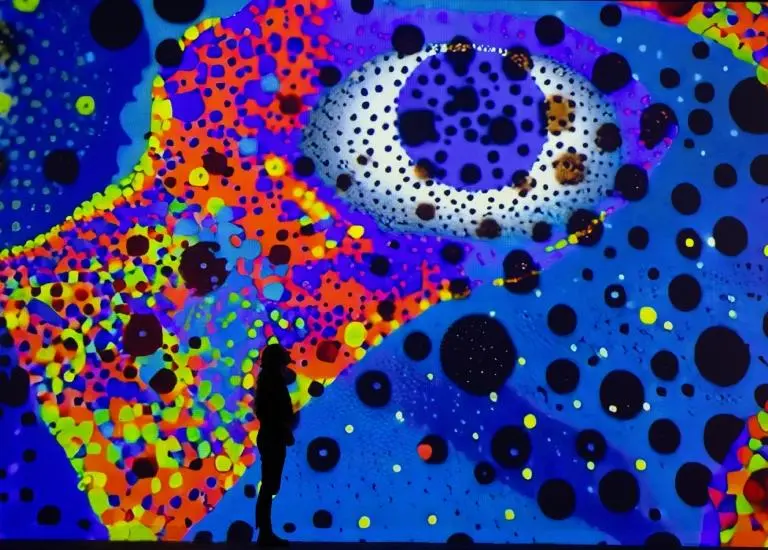
The strongest reason to care about Frameless is its clear point of view: art can be encountered through space, sound and motion as well as through close looking. That makes the venue approachable for people who enjoy visual storytelling, and gives experienced gallery visitors another way to think about composition and scale.
There are practical boundaries to that appeal. The experience is shared with other visitors and places a premium on a room-scale sensory effect. Anyone who needs a quiet gallery, wants to study original materials, or has sensory sensitivities should check the venue’s access information and consider the event and timing carefully. The same immersive design that gives the brand its identity will not be every visitor’s preferred way to meet art.
Families considering a specific session can check standard visit information and review the venue guidance in advance. A themed programme may be a more natural fit for children with a particular interest, but the session listing should guide that choice. A short planning check makes the difference between choosing for the brand’s reputation and choosing for your group.

Before you decide
For a first visit, we recommend starting with standard admission if you want to understand the core gallery concept, then choosing Lates or a residency only when its timing or subject better fits your plans. Frameless has a distinct identity and a varied programme, but a projection-led interpretation is not a substitute for seeing original works in a quieter collection setting.
Read the venue’s current listings closely, especially for event format, session audience and access information. The right question is less whether immersive art is universally better, and more whether you want a shared, sensory encounter for this particular outing. To compare the options, review the standard visit or look at the Lates format alongside the current residency information before settling on a plan.
Our editorial recommendation: consider Frameless when you want art interpreted through room-scale image and sound, with the programme matched to your group.