

A clear introduction to Frameless, from its four projection-led galleries to the changing events that give the London venue a wider identity.
What makes Frameless distinct from a conventional gallery visit? The London venue builds its offer around familiar works of art presented at room scale, with projection and sound shaping how visitors encounter them. For a first-time reader, the useful question is not only what is on the walls, but what kind of visit the format creates.
The programme has a permanent core and a changing edge: standard admission introduces four galleries, while evening events and residencies give the venue different moods and subjects. This introduction draws on the venue’s published information and programme pages.
We may earn a commission when you buy through links on this page, at no extra cost to you.
Key facts: Frameless says its four galleries feature more than 40 artworks presented with projection and sound. The broadest starting point is Standard admission; FRAMELESS Lates adds an 18+ evening format, and a limited-run wildlife residency offers a more specific subject. The best fit depends on whether you want breadth, an evening out, or a programme with a defined theme.
Projection changes how familiar compositions read
The venue’s central idea is straightforward: rather than keeping each work within a framed rectangle, it uses large-scale imagery and original score to make the surrounding room part of the encounter. That shift can make colour, movement and composition easier to notice, while also changing the pace of looking. The brand describes more than 40 artworks across four immersive galleries, giving a first visit a substantial range without requiring specialist art knowledge. Visitors can review the Standard admission overview before choosing a date, and the venue’s four-gallery visit information sets the scope of that first look.
This works best as an interpretive experience. Visitors can recognise well-known images while taking in details that may be less obvious in a standard reproduction. For example, the published gallery material includes Rembrandt’s Christ on the Storm, an image whose movement and dramatic contrast lend themselves to a room-scale presentation. In our reading, the emphasis on scale, light and sound makes this a sensory way to encounter art, rather than a quiet sequence of individual labels.
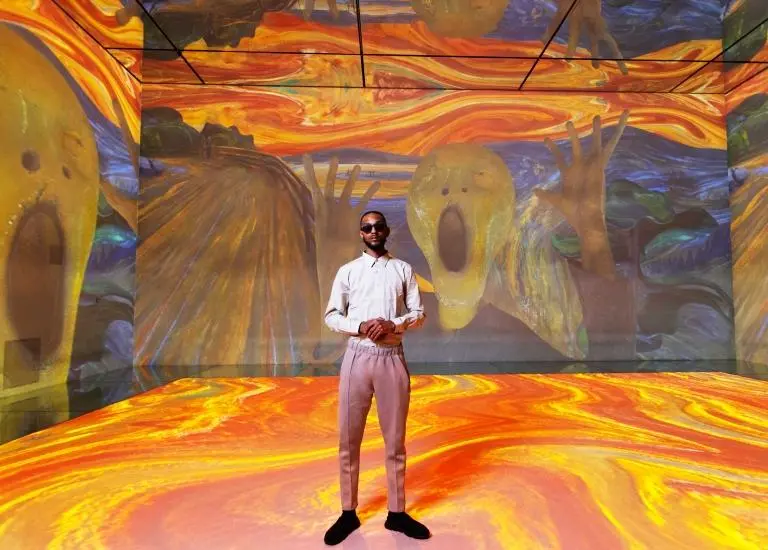
The standard Frameless visit centres this format. That design choice is also the main limitation to keep in mind. Projection can prioritise atmosphere and visual impact over close inspection of a physical original. A visitor who likes to spend time with object labels, paper texture or the material history of a painting may want to pair the visit with a more traditional collection. Frameless is most persuasive for readers curious about how presentation changes interpretation.
- Four galleries give the visit a clear structure.
- Large-scale projection makes the surrounding room part of the viewing experience.
- Sound and score contribute to the atmosphere, so the format is deliberately sensory.
A standard visit gives newcomers the full venue
The published Standard admission page is the natural place to begin if the goal is to understand Frameless as a whole. Its four-gallery format presents a range of artworks rather than narrowing the visit to one temporary subject. This makes it a practical choice for first-time visitors who want an overview, or for a group with different levels of interest in art. The admission page outlines this broad entry point, and the gallery visit option is the one to compare with special programming.
Because the venue is organised around moving imagery, it helps to arrive ready to look around rather than follow a single fixed route through a collection. Check the official Standard admission details for the current visit information, and use the page to review the available dates and terms before making plans. The gallery material also gives glimpses of distinct visual approaches: one room can lean into a painter’s palette, another into the rhythm of projected movement.

The Standard admission page provides the practical starting point. For a reader trying to decide whether to go, the useful distinction is between breadth and depth. Standard admission gives the broadest introduction to the venue’s format. A themed event or residency may be more satisfying if one particular subject is what brings you in, but it will not stand in for the complete four-gallery overview.
- Choose the broad gallery visit when this is your first introduction.
- Check the visit page for the current schedule and practical details.
- Consider whether a sensory, moving-image presentation suits your group.
Lates adds music and a social setting
FRAMELESS Lates changes the context rather than simply extending daytime admission. The venue describes it as an 18+ after-hours experience with a curated Soho Radio soundtrack and café bar. That combination makes the galleries part of a broader evening plan, especially for adults who want art alongside music and a social setting. See the official FRAMELESS Lates listing for the after-hours format, or visit its event information page when comparing dates.
It remains rooted in the same projection-led environment, so the choice is about timing and atmosphere as much as content. Readers who prefer a quieter daytime visit may find standard admission a better fit; those interested in an adult evening can review the dedicated FRAMELESS Lates page. Its official page is also where to confirm the format and availability attached to a particular date. The Lates option is best judged on its own evening context, rather than treated as standard admission with a different start time.
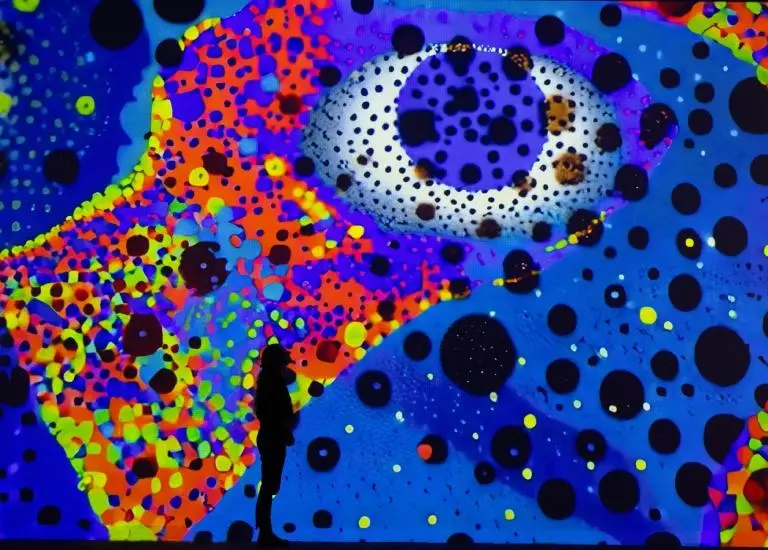
As an editorial proposition, Lates shows how Frameless is trying to be more than a one-off attraction. The venue uses its rooms as a base for different kinds of cultural evenings, while keeping immersive art at the centre. That broader identity may interest returning visitors, though the night format is not necessary to understand the underlying gallery concept.
Limited residencies bring new subjects into the galleries
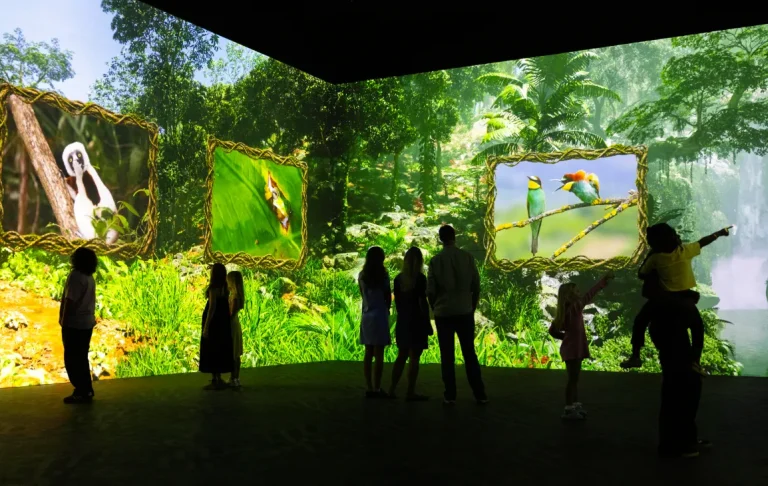
Limited-run residencies are the changing part of the programme. The Nikon Comedy Wildlife Awards residency, for example, brings wildlife photography into the Frameless setting. The specific subject gives visitors a clear reason to follow a temporary programme, and it offers a different visual register from the venue’s painter-focused gallery works. The wildlife residency listing explains the featured subject, while the Nikon Comedy Wildlife programme is a distinct choice for visitors drawn to wildlife photography.
Its official listing is the place to check the residency’s current dates and details, since limited-run programming can change. Browse the Nikon Comedy Wildlife Awards residency page if wildlife photography is the main draw. The broader editorial point is that a changing subject can make a return visit feel distinct, without implying that every temporary programme will suit every visitor.

The limited-run programme page is useful to check before planning around it. For first-timers, the residency is best treated as an optional layer rather than a substitute for knowing what the venue is. It has more appeal for readers who want a defined theme, while standard admission better communicates the breadth of the four-gallery idea. Looking at the current programme before booking helps match the choice to the reason for going.
- For an overview: start with the four-gallery admission information.
- For an evening: compare the adult-focused Lates format.
- For a specific subject: check the current residency listing and dates.
Before you decide
We would recommend Frameless to a first-time visitor who is open to art presented as an environment, rather than expecting the conventions of a quiet museum. Standard admission is the clearest introduction; Lates and the wildlife residency make sense when their particular timing or subject matches your plans. Review the official pages for current availability and visit details before choosing.
The honest limitation is that immersive projection changes the priorities: it can make imagery vivid and enveloping, but it is not the same as studying original works at close range. If that trade-off sounds worthwhile, the venue offers a clear, accessible way into art through scale, sound and changing programming.
Frameless is worth considering for visitors who want art to surround them, with standard admission the strongest first introduction.